
A scale model of the DEC VT52 terminal, designed to be used with a PiDP11. Work in progress - not ready to print yet.
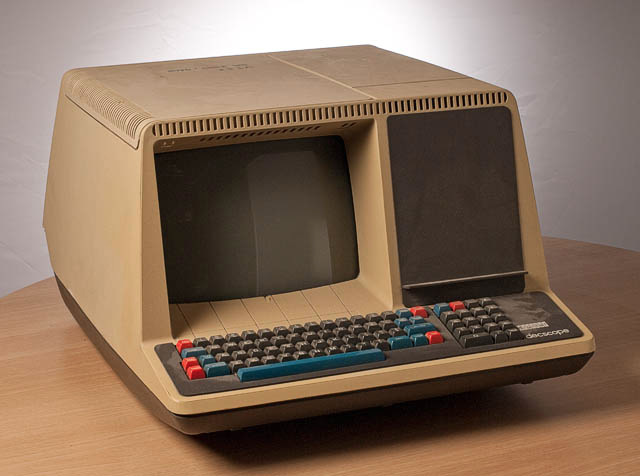 Photo of the original DEC VT52 terminal |
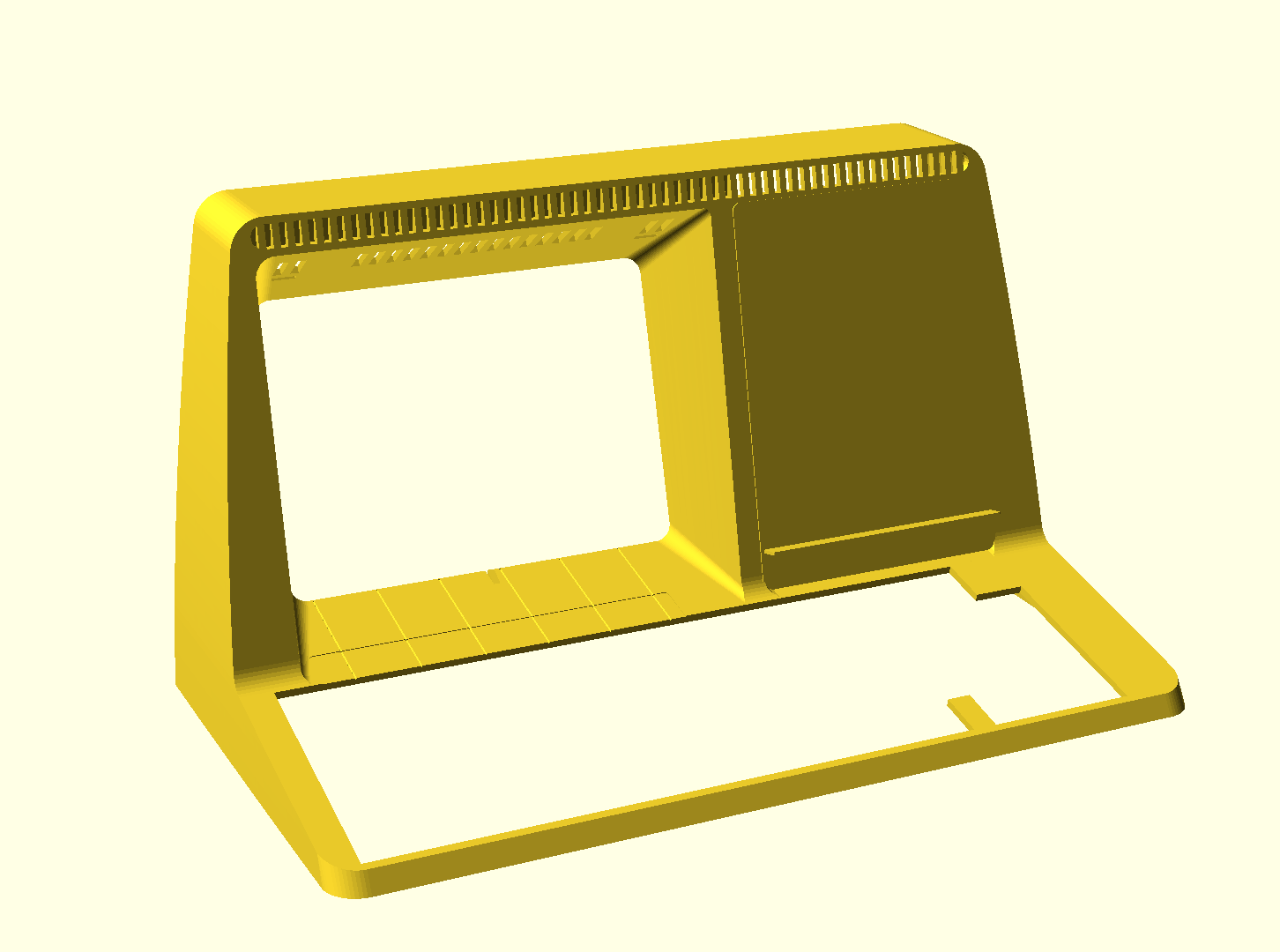 3D render of this model |
The model is based on the VT50 Field Maintenance Print Set, a set of original DEC technical drawings. It is designed to be scaled to 2/3 of the original size, 3D printed in parts, and assembled with a USB keyboard and an LCD panel. The model is built using OpenSCAD and the Belfry OpenSCAD Library v2 (BOSL2).
Fitting a real keyboard and an LCD panel into a scaled-down enclosure required some changes to the model geometry.
The keyboard area length was adjusted because a 65% keyboard fits well side to side, but not front to back. To accommodate it, the enclosure was extended forward by approximately 3 cm in the keyboard area and raised by about 6 mm. This is implemented by extending the model into negative X and Y coordinates, which keeps the rest of the model aligned with the original DEC drawings.
Because the keyboard is oversized relative to a true 2/3-scale model, the keyboard area looks noticeably different from the original terminal. Design elements such as the "DIGITAL DECscope" logo had to be repositioned accordingly.
This model is designed for use with a 65% keyboard and an 8" LCD panel. It has been optimized for the following specific hardware:
-
Royal Kludge R65 65% Wired Gaming Keyboard (QMK/VIA)
- Only the internals of the keyboard are used - the case and volume knob are omitted.
- A different 65% keyboard can likely be substituted, but will probably require adjustments to the keyboard mounting features in
keyboard.scad.
-
Innolux 8" IPS 1024×768 HJ080IA-01E Display Panel
- Any 4:3 8" panel with a backlight and a driver board with HDMI input should work. Panels matching this description are readily available on AliExpress for around €40 (as of 2026).
These are simply the parts I purchased; I have no affiliation with their manufacturers. The model should be straightforward to adapt to a different keyboard or LCD panel.
The model was created mostly by hand. That said, AI was used in a few specific ways:
- Geometric debugging: I used Claude to help debug trigonometric calculations when I got completely lost.
- Data extraction: Claude was used to read numeric data tables from low-quality scanned technical drawings (see
body_tables.scad). The scans had too many numbers to copy manually, so Claude was used essentially as an OCR tool. - This document: Claude was used to improve the language. I wrote the original text by hand, but English is not my first language - trust me, you prefer this version.
No AI was used in any other part of creating this model.
The DEC VT52 photo was downloaded from Wikipedia.
