Hey there! I'm Cat. Here I share quality Python, AI, and general tech content weekly, mostly in English. The newsletter is open source on Github - give it a star if you like it!
This week we're featuring 12 articles, 12 open source projects.
1、A Tail Calling Interpreter For Python (And Other Updates)
The most exciting news lately is Python 3.14's new interpreter, which uses technology from this article's author. The article reviews the application of tail call optimization technology in multiple projects over the four years since it was proposed, including Python 3.14, LuaJIT Remake, GCC and Clang support, and the ongoing push to include it in C standard proposals.
2、A year of uv: pros, cons, and should you migrate
uv has been out for a year now, and its popularity momentum is as strong as Ruff! This long article thoroughly analyzes uv's pros and cons, when you should use it, and when you shouldn't. Overall, the advantages far outweigh the disadvantages, and the conclusion is clear - it's time to migrate to uv!
3、Creating the MongoDB Database Backend for Django
From MongoDB's official blog, this introduces their journey of developing a NoSQL database backend for the Django framework, including discovering needs from survey data, developing the database backend based on open source projects, and implementing support for MongoDB features.
4、PyPI Now Supports iOS and Android Wheels for Mobile Python Development
Great news! Through PEP-730 and PEP-738, Python now supports distributing binary packages (wheels) for iOS and Android platforms. This PyPI move will lower the barrier for Python mobile development.
5、Building a Python compiler and interpreter – 10 elif and else
The tenth article in the "Building a Python compiler and interpreter" series, implementing support for conditional statements elif and else, showing how to add complex control flow statements in a compiler.
6、Building a playing card deck
Introduces how to develop a complete deck of playing cards using Python and SVG images, supporting dynamic card generation, sorting, displaying card faces, shuffling and dealing, demonstrating the application of data processing, file operations, and visualization.
7、Implementing LLaMA3 in 100 Lines of Pure Jax
How do you implement a simplified version of the LLaMA3 model? The article utilizes JAX's pure functions and features like JIT and vmap to implement all core components of the LLaMA3 model, suitable for learning Transformer architecture and JAX usage.
8、Measuring the performance of Python's any() function
When Python's any() function takes generator expressions versus lists as parameters, which performs better? After testing, the author found that when the first True value appears early in the sequence, generator expressions perform better; when the entire sequence needs to be checked, lists might perform better.
9、Push notifications without a mobile app: an experiment (with Django)
Explores how to implement asynchronous push notifications through the Django framework using Web Push Notifications and Progressive Web Apps (PWA) technology without relying on mobile applications.
10、Change Python's syntax with the "# coding:" trick
Introduces how to customize code decoding methods through Python's # coding: directive and codecs module, thereby changing Python's syntax. The article implements a decoder that can convert brace syntax to Python's indentation syntax.
11、On inheritance and subtyping
The article compares the implementation of inheritance and subtyping in Java, Go, and Python, exploring how language design affects inheritance mechanisms: Java has explicit inheritance and subtyping, Go implements implicit inheritance through duck typing, while Python combines explicit inheritance with static duck typing through protocols.
12、Generating visual art every day in January
The author participated in the Genuary activity, generating a visual art piece every day in January. In this challenge, he deeply explored the application of PyScript and WebGL in creative programming, discussing the performance and limitations of Pyodide and MicroPython in browsers. The article also shares some stunning 3D creative works.
1、pyquery: A jquery-like library for python
It allows you to perform jQuery queries on XML documents, using lxml for fast XML and HTML manipulation. (2.3K stars)
2、Youtube-playlist-to-formatted-text: A desktop application that extracts YouTube playlist transcripts
Automatically extracts subtitles from YouTube playlists, uses Gemini for text refinement, and outputs to formatted Markdown files.
3、podcastfy: An Open Source Python alternative to NotebookLM's podcast feature
Uses generative AI to transform multimodal content into engaging multilingual voice conversations, serving as an alternative to Google's NotebookLM. (3.2K stars)
4、harbor: Effortlessly run LLM backends, APIs, frontends, and services with one command
A containerized LLM toolkit that allows you to run LLMs and other services. Includes a CLI and companion app for easy management and running of AI services. (1.3K stars)
5、gixy: NGINX configuration static analyzer
A tool for analyzing NGINX configurations that prevents security misconfigurations and automates defect detection.
6、bagofwords: An AI-powered data tool
A dashboard project developed with Python + Vue.js that seamlessly integrates with various data sources, including databases, APIs, and business systems, enabling effective data analysis.
7、OmniParser: A simple screen parsing tool towards pure vision based GUI agent
Open sourced by Microsoft, it can parse user interface screenshots into structured and easily understandable elements, enhancing GPT-4V's ability to accurately locate and generate actions. (15.8K stars)
8、Tamga: Modern, logging utility for Python with multiple output formats and colorful console output.
A modern Python logging tool supporting multiple output formats and colorful console output. Uses Tailwind CSS color palette, integrates MongoDB, supports file rotation and email notifications.
9、frames_of_mind: Animating R1's thoughts.
Saves chain of thought as text, then converts it to embeddings using OpenAI API, and finally plots the embeddings using t-SNE.
10、vlmrun-hub: A hub for various industry-specific schemas to be used with VLMs.
A comprehensive repository containing predefined Pydantic schemas for extracting structured data from unstructured visual content such as images, videos, and documents. Leverages Pydantic for automatic data validation and type safety.
11、ExtractThinker: ExtractThinker is a Document Intelligence library for LLMs
Utilizes large language models to extract and classify structured data from documents, functioning like an ORM to enable seamless document processing workflows. (1.1K stars)
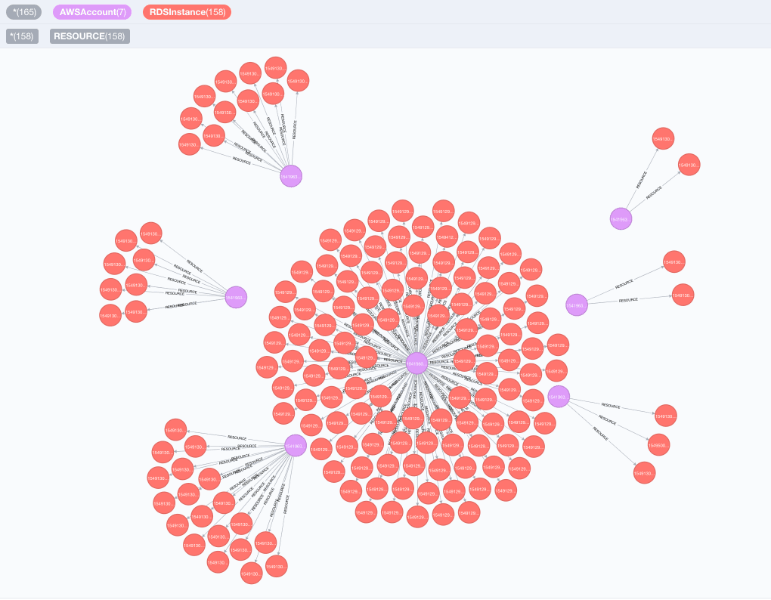
12、cartography: consolidates infrastructure assets and the relationships between them
Through an intuitive graph view powered by Neo4j database, it visualizes relationships between infrastructure assets, reveals hidden dependencies, and reduces security risks. (3.2K stars)
Python Trending Weekly #40: White House recommends using memory-safe languages like Python (2024.03.02)
Tech newsletters are smart tools for intelligent people to filter quality knowledge in the information overload era. This is a platform tailored for domestic Python developers, curating the most valuable articles, tutorials, open source projects, software tools, podcasts and videos, trending topics, and rich content worth sharing. Subscribe now to receive weekly article updates and improve a little bit each week.
Feel free to leave comments about which share you liked most in this issue! The more feedback everyone provides, the more I'll share in the future!
Welcome to share this newsletter with fellow learners. When someone purchases the newsletter through your shared poster or link, you'll receive a 50% commission.
Python Trending Weekly Season 2 concluded, sharing several summaries
Python Trending Weekly Season 1 highlights collection (1~30)
10,000-word condensed version, 800 links from Python Trending Weekly Season 1!