| title | Python Trending Weekly #59: Polars 1.0 Released, PyCon US 2024 Talk Videos Also Released |
|---|---|
| pubDate | 2024-07-06 |
Hey there, I'm Cat! Here I share quality Python, AI, and general tech content weekly, mostly in English. Also check out our Telegram channel for additional rich content updates!
This week we're featuring 12 articles, 12 open-source projects, 5 book giveaways, totaling 2200 words.
1、Polars 1.0 Released! What's Next?
After 4 years since its founding and reaching 27.5K stars, Polars has officially released version 1.0. Future plans include designing a new streaming engine, GPU acceleration using NVIDIA RAPIDS, providing Polars cloud hosting services, and more. (Also: Polars vs. pandas: What's the Difference?)
2、Python Struggles with Apple App Store Rejections
Some apps were rejected by Apple's App Store after upgrading to Python 3.12 due to containing the specific string "itms-services". The article reviews a week-long discussion among Python developers, ultimately reaching consensus to add the build option --with-app-store-compliance in Python 3.13 to solve this issue. (Also: Detailed discussion on Python forums)
3、The Challenge of Extracting Data from PDFs, Practical RAG Applications
Extracting text from PDF files faces numerous challenges: position-based fixed layouts, lack of logical structure, containing scanned or photographed images, artifacts, table content, and landscape/portrait pages. The article introduces LLMWhisperer's PDF-to-text service and how it effectively solves content extraction problems.
4、Ten Ways to Implement Factorial Functions in Python
The factorial of a non-negative integer n is the product of all positive integers less than or equal to n. The article introduces various implementation methods, including math.factorial(n), iterative approach, generator method, list comprehension, recursive approach, and more.
5、Best Practices for Python Development
The article provides 27 recommendations for Python development, covering Python environment management, dependency management, project structure, formatting tools, testing tools, recommended syntax, application design, software library selection, and other aspects.
6、MicroPython Getting Started Guide: (Part 1) Environment Setup, Blink, Deployment
MicroPython is a Python interpreter designed specifically for microcontrollers and embedded systems. This introductory guide series begins with environment configuration, basic concepts, and fundamental usage.
7、Using .NET Libraries to Boost Your Python Program Performance
One way to improve Python project performance is by calling libraries developed in other languages. The article introduces using the pythonnet library to call .NET-developed dll libraries and tests the performance differences compared to native Python code.
8、My Python Code Is a Neural Network
The author explains how to embed Python programs into recurrent neural networks (RNNs) and use trained RNNs to execute tasks. Compared to hand-writing algorithms and repeatedly debugging and improving them, the neural network embedding approach performs better.
9、Overview of Python's Sparse Array Ecosystem
Sparse arrays have most elements as zeros or other forms of placeholders, with only a few elements being non-zero or meaningful values. The article explains why to use sparse arrays, common storage formats, and Python libraries for handling sparse arrays (sparse, scipy.sparse, cupyx.sparse, torch.sparse, etc.).
10、Cybercriminals Pose as "Helpful" Stack Overflow Users to Push Malware
When you post a question on Stack Overflow and someone comments suggesting you install a certain library to solve it, you'd probably give it a try, right? However, that library could be malware! The article analyzes a recent "novel" attack method and reminds everyone to stay vigilant.
11、Using Prettier to Format Django or Jinja Templates
The author explains how to use JavaScript's Prettier formatting tool and its plugins to format Jinja template files, also mentioning two pure Python alternatives: curlylint and DjHTML.
12、Two Ways to Keep Changes in Sync: Derive vs Test
Programming often involves synchronizing changes across multiple locations in code. The article introduces two methods: derive and test. Through 4 real-world examples, it demonstrates their usage. Idealized fully automatic synchronization methods might come at a high cost, while manual code synchronization combined with testing might be more reasonable.
1、graphrag: Graph-Based Modular RAG System
Microsoft's latest open-source RAG system that uses the power of LLMs to extract meaningful structured data from unstructured text. Uses knowledge graph memory structures to enhance LLM outputs. (4.6K stars)
2、puepy: Python+WebAssembly Frontend Framework Based on PyScript
A frontend framework based on PyScript that runs entirely in the browser, partially inspired by Vue. The goal is to support both Pyodide and MicroPython.
3、psqlpy: Async Python PostgreSQL Driver Written in Rust
A PostgreSQL driver for Python completely developed in Rust, offering fast performance and type safety.
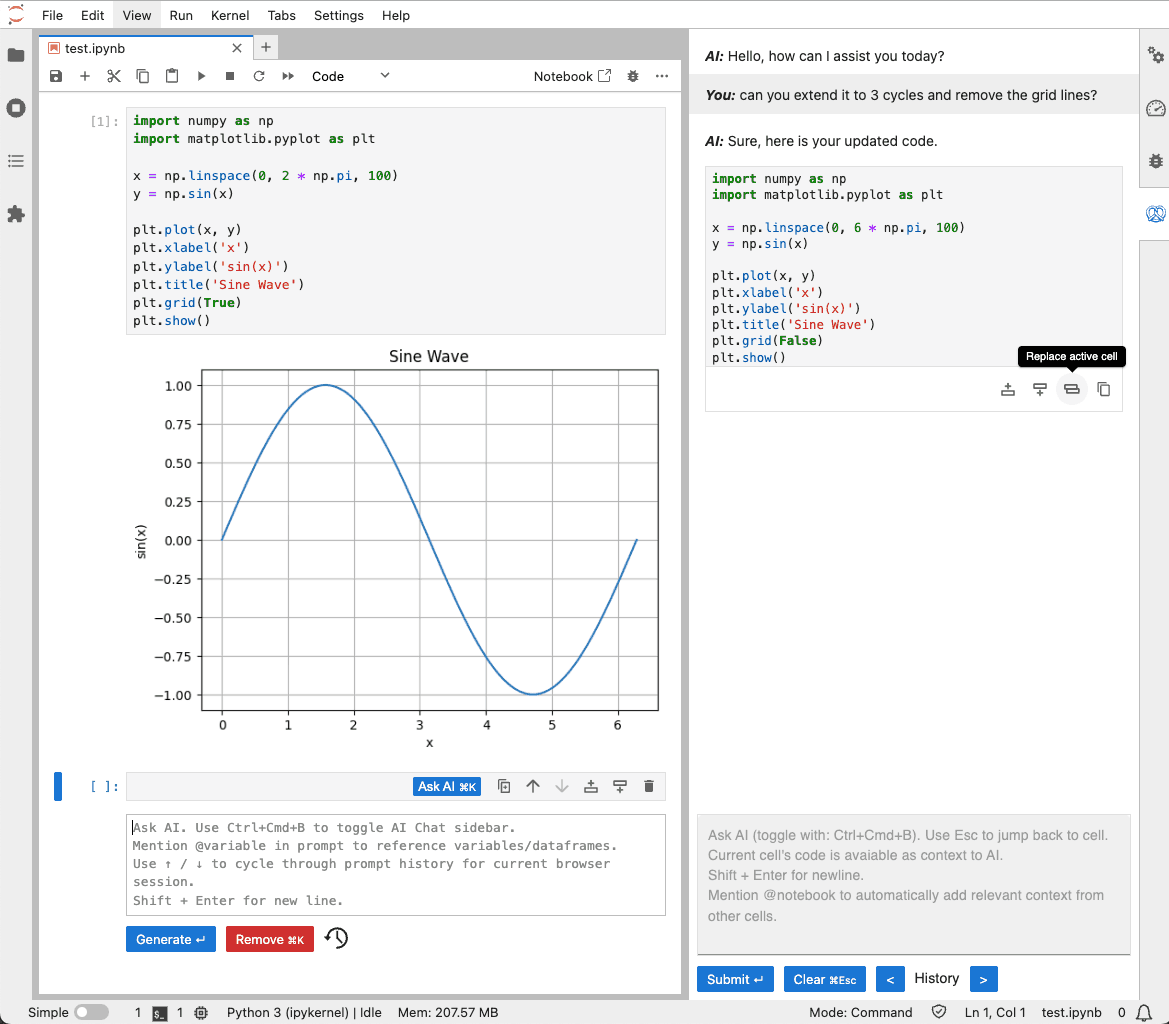
4、pretzelai: Modern Alternative to Jupyter Notebooks
An improved version of Jupyter with added features like AI code generation and editing, inline tab completion, sidebar chat, and error fixing. (1.8K stars)
5、meet-libai: Building Li Bai Knowledge Graph, Training AI Li Bai Agent
This project aims to collect Li Bai's poetry and related materials, build a Li Bai knowledge graph, train professional AI agents, and ultimately develop an interactive Li Bai dialogue application.
6、flpc: Python Regular Expression Library Developed in Rust
A regular expression library developed in Rust, aimed at replacing Python's native re module. Most functions are the same as re, but there are exceptions.
7、Taiwan-LLM: Traditional Chinese LLM from Taiwan
A large model fine-tuned using Llama-3 on extensive Traditional Chinese and English data, with strong language understanding, generation, reasoning, and multi-turn dialogue capabilities. (1.1K stars)
8、ttkbootstrap: Enhanced Themes for tkinter, Bootstrap-Inspired Modern Flat Style
Beautification themes for tkinter with Bootstrap-inspired design style. Built-in dozen dark and light themes, numerous predefined widgets, supports creating custom themes. (1.8K stars)
9、bunkerweb: Open Source Web Application Firewall (WAF)
A full-featured web security server (based on NGINX) that can seamlessly integrate into various environments (Linux, Docker, Swarm, Kubernetes, etc.), providing a console web UI. (3.8K stars)
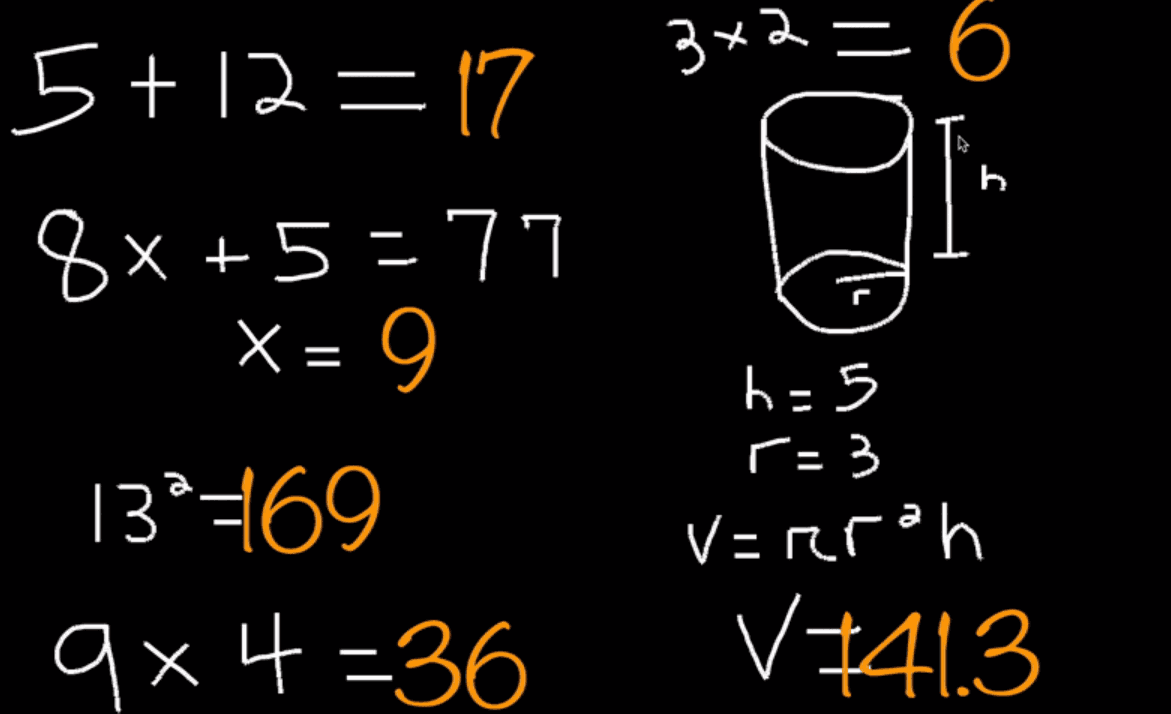
10、AI-Math-Notes: Interactive AI Math Blackboard
An interactive drawing application where multimodal LLMs calculate results and display them next to the equals sign when you write mathematical equations on the canvas. Inspired by Apple's "Math Notes" demo at WWDC 2024.
11、cookiecutter-django: Quickly Bootstrap Production-Ready Django Projects
Based on Cookiecutter, can quickly bootstrap a fully-featured Django project. Supports Django 4.2 and Python 3.12, with 100% bootstrap test coverage. (11.8K stars)
12、Linly-Talker: Digital Avatar System Combining Large Language Models and Vision Models
A digital human system that integrates various technologies such as Whisper, Linly, Microsoft Speech, and SadTalker talking generation system. (1.2K stars)
1、PyCon US 2024 Talk Video Playlist
PyCon officially uploaded the talk videos from PyCon US 2024.
2、PyCon Sweden 2024 Talk Videos
PyCon Sweden also updated their talk videos from this year's event.